
Description
Product Overview
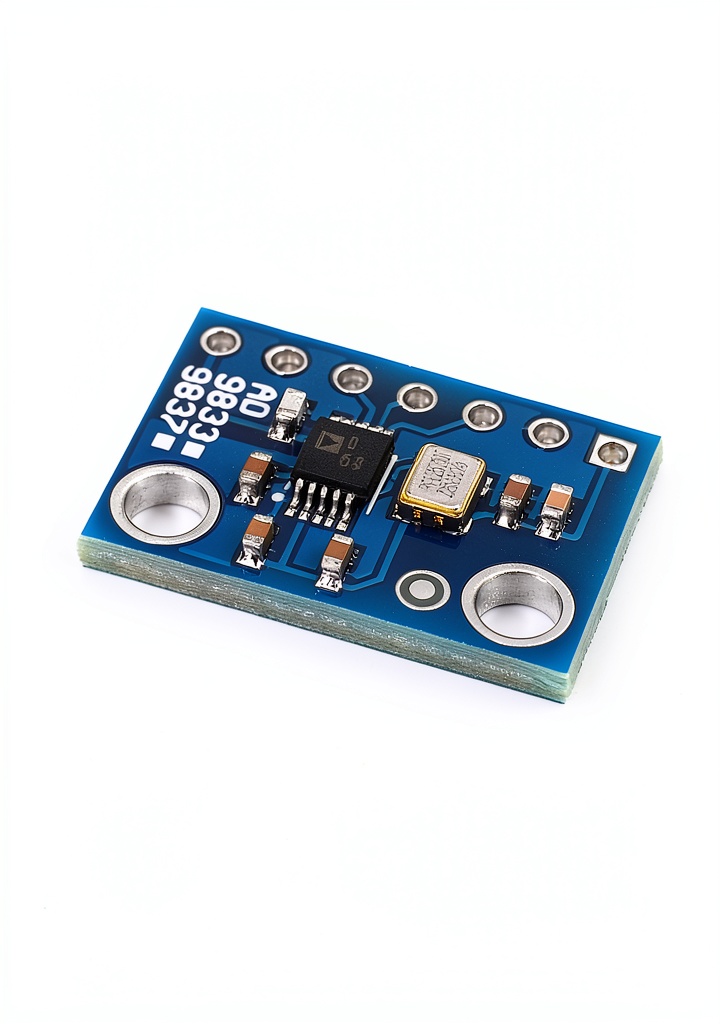
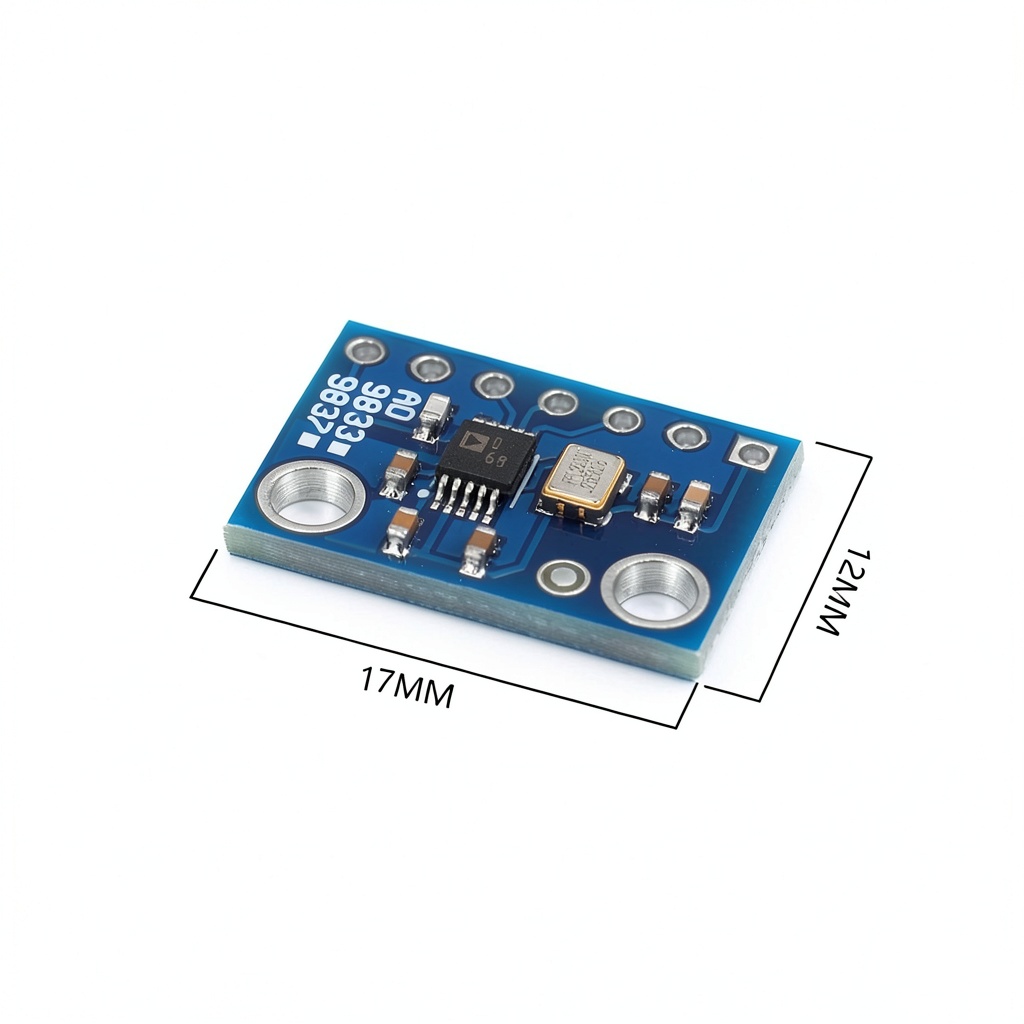
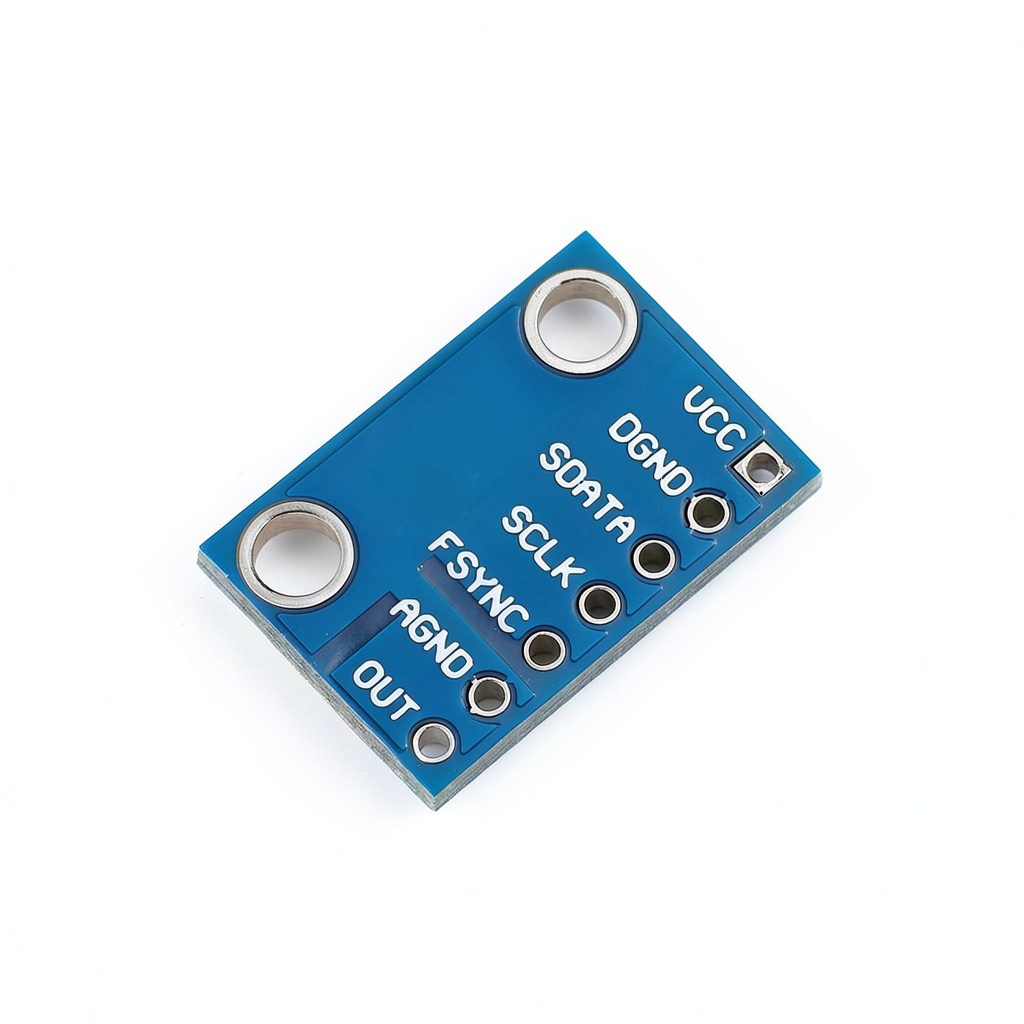
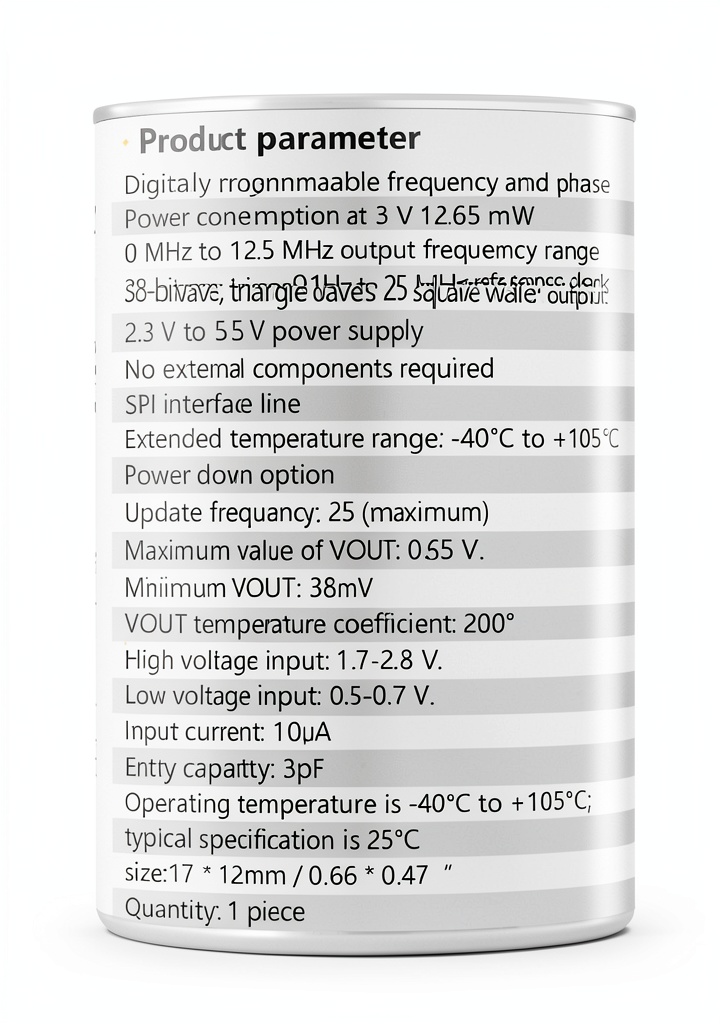
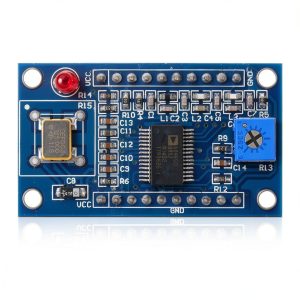
The HiLetgo AD9833 programmable signal generator is a compact, high‑performance module designed for engineers, hobbyists, and educators who need reliable waveform synthesis in a small form factor. Measuring just 17 × 12 mm, the board houses the AD9833 DDS chip, which can produce sine, triangle, and square wave outputs with frequencies ranging from 0 Hz up to 12.5 MHz. Powered by a flexible 2.3 V to 5.5 V supply, the module can be driven directly from common development platforms such as Arduino, Raspberry Pi, or any microcontroller with an SPI interface. The module’s robust construction includes a gold‑plated PCB for improved signal integrity and a set of clearly labeled pins for easy wiring. Detailed specifications include a 0‑12.5 MHz output range, 0.5 % frequency accuracy, and a low‑noise output stage that ensures clean waveforms even at high frequencies. The AD9833 chip also supports programmable phase control, allowing users to fine‑tune the waveform phase in 0.022° increments, which is valuable for advanced signal analysis and communication experiments. Overall, this module combines versatility, precision, and ease of use, making it a go‑to solution for a wide variety of electronic testing and development tasks.
![[Product front view showing all components]](https://www.fitnessfinds.store/wp-content/uploads/2026/08/d4036d2979bb47acab49f0f929c9c007.jpg)
Usage
Designed with practicality in mind, the AD9833 module fits seamlessly into a range of real‑world applications. In a laboratory setting, it can serve as a reliable source for frequency response testing, filter characterization, and oscillator design verification. Its programmable nature allows users to quickly switch between waveform types and frequencies, reducing setup time and increasing experimental throughput. For hobbyist projects, the module is perfect for generating audio tones, creating simple music synthesizers, or driving LED displays with varying brightness patterns. The SPI interface makes integration straightforward: a few lines of code on an Arduino or similar board can configure the desired waveform, frequency, and phase, enabling rapid prototyping of communication protocols such as UART, SPI, or I²C test benches. In educational environments, the module provides a hands‑on learning tool for students studying digital signal processing, allowing them to visualize how waveform parameters affect system behavior. Additionally, the low power consumption and small size make it suitable for portable test equipment, battery‑operated devices, and embedded systems where space and energy efficiency are critical.
Why Choose Us
Choosing the HiLetgo AD9833 module means selecting a product backed by a reputation for quality and reliability. HiLetgo sources components from reputable manufacturers and subjects each board to rigorous functional testing before shipment, ensuring that every unit meets the advertised specifications. The module’s gold‑plated contacts and high‑grade PCB material provide superior durability, reducing the risk of corrosion or signal degradation over time. Our customer support team is available to assist with integration questions, firmware troubleshooting, and design advice, offering prompt responses and detailed documentation. We also provide comprehensive example code and wiring diagrams to accelerate development, along with a community forum where users can share projects and solutions. In addition, the module’s competitive price point, combined with its extensive feature set, delivers exceptional value for both professional engineers and hobbyist makers. By purchasing from HiLetgo, you benefit from a commitment to continuous improvement, regular firmware updates, and a focus on user satisfaction that sets us apart from generic, unbranded alternatives.
Key Features
- Wide frequency range of 0 to 12.5 MHz provides flexibility for diverse testing and design needs.
- Three waveform options—sine, triangle, and square—enable accurate simulation of analog and digital signals.
- Compact 17 × 12 mm footprint fits into tight spaces, ideal for portable and embedded applications.
- Low power 2.3‑5.5 V operation allows direct connection to common microcontroller boards without additional regulators.
- Responsive technical support and detailed documentation ensure smooth integration and long‑term reliability.
FAQ
What microcontrollers are compatible with the AD9833 module?
The module uses a standard SPI interface, making it compatible with virtually any microcontroller that supports SPI communication, including Arduino, ESP32, STM32, Raspberry Pi, and many others. Users simply need to connect the MOSI, SCK, and CS pins to the corresponding pins on their board and configure the SPI settings in software.
Can the module generate waveforms above 12.5 MHz?
No, the AD9833 chip is specified for a maximum output frequency of 12.5 MHz. Attempting to exceed this limit may result in distorted waveforms or reduced accuracy. For applications requiring higher frequencies, a different DDS chip such as the AD9850 or AD9954 would be more appropriate.
How do I change the waveform type and frequency programmatically?
Changing the waveform and frequency is done by sending specific command bytes over the SPI bus. The AD9833 datasheet provides the exact register formats; however, HiLetgo supplies example Arduino sketches that demonstrate how to select sine, triangle, or square waveforms and set the desired frequency using simple function calls.
Is the output signal suitable for driving external circuits directly?
The AD9833 output is a low‑impedance, voltage‑mode signal that can drive typical 50 Ω to 1 kΩ loads without additional buffering. For higher‑impedance loads or when a higher drive strength is needed, an external amplifier or buffer stage is recommended to maintain signal integrity.
What warranty and after‑sales service does HiLetgo provide?
HiLetgo offers a 12‑month limited warranty covering manufacturing defects. If you encounter any issues, you can contact our support team for troubleshooting assistance, replacement parts, or a full unit exchange, ensuring that your development workflow remains uninterrupted.
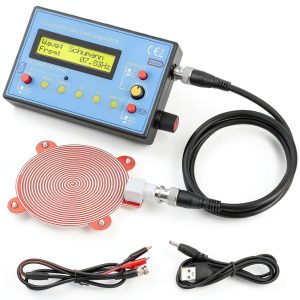 Mini DDS Signal Generator by Koolertron with 7.83Hz Schumann Resonator
Reviews
There are no reviews yet.